
In actual production, the stability of the canned food production line and product consistency directly impact a company's production efficiency and market competitiveness. However, many customers encounter issues of varying severity during operation. This article will summarize common problems and provide practical solutions to help improve the overall performance of the production line.
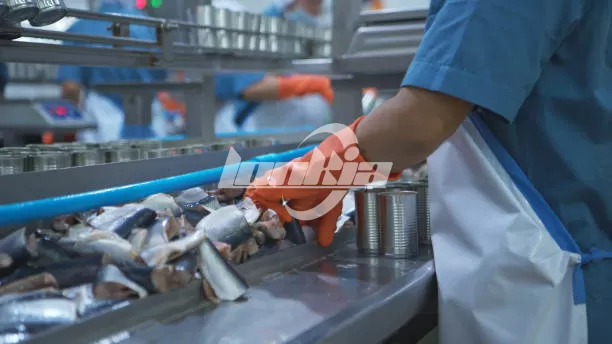
Uneven Filling Affecting Product Consistency
Problem Symptoms
Inconsistent liquid levels and deviations in the solid-to-liquid ratio result in unstable product appearance and weight.
Cause Analysis
- Insufficient filling machine accuracy
- Poor flowability of raw materials or inconsistent particle size
- Mismatch between conveyor rhythm and filling cycle
Solutions
- Select high-precision volumetric filling equipment to ensure stable metering
- Add stirring or pre-processing steps to ensure uniform material consistency
- Optimize inter-line coordination control to achieve cycle synchronization
👉 For enterprises seeking stable output, an automated control system for the entire production line is particularly critical, as it effectively reduces human interference.
Inadequate Sealing Leading to Leaks or Spoilage
Symptoms
Cans leak or swell, severely compromising food safety.
Root Causes
- Improper pressure or parameter settings on the sealer
- Poor compatibility between lids and cans
- Deteriorating seal quality due to equipment wear
Solutions
- Regularly calibrate sealer parameters to ensure stable pressure and speed
- Use standardized cans and lids
- Inspect sealing rollers and critical components for wear and replace them promptly
👉 High-quality sealing equipment is essential for ensuring the integrity of canned products.
Incomplete Sterilization and Associated Safety Risks
Symptoms
Shorter product shelf life, or even spoilage.
Causes
- Insufficient sterilization temperature or duration
- Unstable temperature control in sterilization equipment
- Loading methods affecting heat transfer
Solutions
- Precisely control the sterilization curve (temperature + time)
- Use sterilization equipment with high stability (e.g., steam or water bath systems)
- Optimize can packing density to ensure even heat distribution
👉 The sterilization process is a critical control point in the entire canned food production line and must be strictly managed.
Unstable Equipment Operation Affecting Production Efficiency
Symptoms
Frequent shutdowns, product jams, and poor conveying.
Root Causes
- Inefficient conveying system design
- Poor compatibility between equipment units
- Lack of a unified control system
Solutions
- Optimize the conveying structure to reduce turns and accumulation
- Adopt an integrated line solution to enhance equipment coordination
- Configure a PLC control system to enable automatic interlocking
👉 Equipment suppliers like Lonkia have extensive experience in integrated line solutions and can effectively improve stability.
Incomplete Cleaning Affects Product Quality
Problem Manifestations
Residual impurities in raw materials affect the final taste and safety.
Cause Analysis
- Inefficient cleaning equipment design
- Insufficient water pressure or inadequate circulation systems
- Complex variety of raw materials
Solutions
- Select multi-stage cleaning equipment (bubble + spray)
- Enhance water circulation and filtration capacity
- Adjust cleaning parameters based on raw material characteristics
👉 The cleaning process is the first line of defense in ensuring product quality and must not be overlooked.
Summary
In a mature canned food production line, every piece of equipment is critical. From filling and sealing to sterilization and conveying, even the smallest details can affect the final product quality. Through proper equipment selection, scientific maintenance, and line-wide optimization, it is possible to effectively reduce failure rates and improve production efficiency.
For companies, choosing an experienced equipment supplier not only ensures stable equipment support but also enables continuous optimization of production performance during later operations, thereby gaining a competitive edge in the highly competitive food processing market.