
For food processing companies, vacuum capping machines are not standalone pieces of equipment but rather an integral part of the entire canned food production line. Whether it's jam, tomato sauce, honey, pickled foods, or ready-to-eat foods, products typically must undergo processes such as filling, vacuum capping, sterilization, cooling, labeling, and packaging to complete the entire production cycle. As the core equipment in the packaging process, vacuum capping machines directly impact product seal quality and the effectiveness of subsequent processing steps. Therefore, when selecting equipment, it is essential to consider not only the machine's performance but also its compatibility with the entire production line.
What Products Are Vacuum Capping Machines Suitable For?
Vacuum capping machines are primarily suitable for foods packaged in glass jars with metal screw caps. They are widely used in production lines for various canned goods and condiments. Common products include:
- Jams, fruit purees, and fruit products
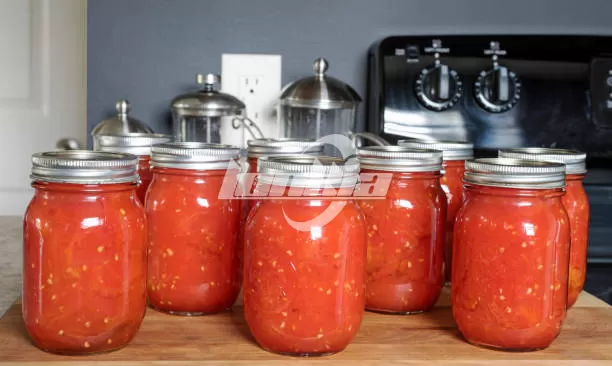
- Tomato sauce, chili sauce, and blended sauces
- High-viscosity products such as honey and syrups
- Pickled foods such as pickled cucumbers, kimchi, and olives
- Various canned fruits and vegetables
- Condiments and other food products packaged in glass bottles
These products typically have high requirements for sealing performance. The vacuum capping machine can complete the capping process under a preset vacuum environment, creating a stable vacuum inside the bottle and providing reliable assurance for subsequent sterilization and long-term storage.
The Role of the Vacuum Capping Machine in Canning Production Lines
In a complete food canning production line, the automatic vacuum capping machine is typically positioned after the filling equipment and before the sterilization equipment, serving as a critical link between packaging and subsequent processing.
During operation, after filling is complete, the products enter the vacuum chamber, where capping is performed under a stable vacuum environment before being conveyed to the sterilization equipment. A stable vacuum seal not only helps maintain product quality but also reduces issues such as liquid leakage and loose lids caused by poor sealing, thereby improving the continuous operational efficiency of the entire production line.
For automated canned food production lines, vacuum capping machines can typically be integrated with filling machines, cap sorters, conveyors, sterilizers, labelers, and case packers to reduce manual intervention and improve production efficiency and packaging consistency.
How to Choose the Right Vacuum Capping Machine for Your Production Line?
Different products and packaging specifications require different equipment configurations. When purchasing, it is recommended to focus on the following aspects:
- Whether it is suitable for your current product types and packaging formats;
- Is it compatible with different sizes of glass bottles and caps?
- Are vacuum levels and capping torque adjustable?
- Can it meet the expected production capacity?
- Is it easy to integrate with existing filling lines or downstream packaging equipment?
- Is it simple to operate and quick to adjust when changing bottle types?
Confirming these factors in advance can minimize the need for subsequent equipment modifications and improve the overall operational efficiency of the production line.
Why Is Equipment Compatibility Equally Important?
Many food companies continuously introduce new product specifications in response to market demand, so whether the equipment offers good compatibility is a key consideration during procurement. Mature vacuum capping machines typically support the replacement of molds for different specifications and allow for quick adjustment of equipment parameters to accommodate various bottle shapes and cap sizes, thereby reducing downtime during changeovers and improving equipment utilization.
In addition, a stable vacuum system, a precise capping mechanism, and an intelligent control system are also essential foundations for ensuring long-term, stable production.
Conclusion
For food processing companies, a reliable vacuum capping machine can improve packaging quality, but what truly determines production efficiency is the coordinated operation of all equipment across the entire production line. From filling, vacuum capping, and sterilization to labeling and packaging, every step must be seamlessly integrated to ensure product quality and production continuity.
Lonkia specializes in the R&D and manufacturing of food and canning processing equipment. We not only provide high-performance vacuum capping machines but also offer complete canning and packaging production line solutions tailored to different product types, bottle specifications, and production capacity requirements, helping customers achieve more stable and efficient automated production.