
In the packaging process for canned foods, sauces, fruit juices, and other products, capping may seem like a simple final step, but the quality of the cap directly affects the product's seal and the effectiveness of subsequent packaging. For manufacturers that still rely on manual capping, the real concern is whether manual capping can maintain consistent quality as production volume increases.
This is also a key reason why bottle capping machines are used in food packaging production lines.
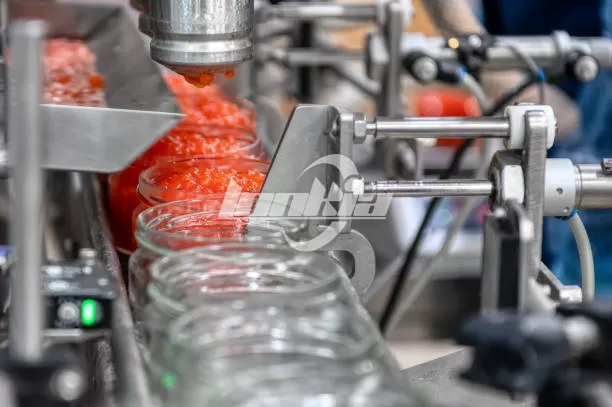
What Problems Does Manual Capping Tend to Encounter in Continuous Production?
The biggest limitation of manual capping is not just speed, but the fact that operating conditions can vary from container to container.
- Inconsistent capping force and seal integrity: During manual operation, different workers may apply varying amounts of force, leading to inconsistent tightness of the bottle caps. If a product has high sealing requirements, it is difficult to maintain stable capping results over the long term by relying solely on manual labor.
- Production speed is limited by manual operations: When the filling machine continuously outputs products, the capping process must keep pace with the production rhythm of the preceding stages. If manual operations cannot keep up, bottles are likely to pile up, affecting the continuous operation of the entire canning food production line.
How Does the Vacuum Capping Machine Solve These Problems?
The bottle capping machine integrates operations such as vacuum extraction, cap placement, and capping into a continuous production process, using mechanical structures and control systems to minimize the variations caused by manual operation.
More Stable Vacuum and Capping Processes
The glass jar vacuum capping machine utilizes servo technology and a precise control system to perform the corresponding operations once the container enters the capping position, ensuring that each container is capped according to the preset process. The equipment is suitable for food packaging such as canned goods, sauces, and fruit juices, and can handle bottle cap sizes ranging from 30 to 60 mm.
Continuous Conveying Suitable for Production Line Integration
The automatic vacuum capping machine uses a conveyor system to continuously feed containers into the capping area, with a rated capacity of approximately 1,800–2,200 bottles/h. For manufacturers already equipped with filling machinery, the system can be tailored to match the capacity and conveying height of upstream and downstream equipment.
What Should You Consider When Purchasing an Automatic Vacuum Capping Machine?
Automation does not mean any machine can be used out of the box. Before purchasing, it is recommended to focus on confirming three key parameters.
- Cap and Container Specifications: First, confirm the cap type and diameter. While the machine is compatible with various cap types—including tin caps and screw caps—the current configuration is designed for a single cap type. Therefore, provide accurate cap dimensions and sample information when requesting a quote.
- Production Line Capacity: Do not focus solely on the maximum speed of a single machine; also verify that the speeds of the filler, conveyor, and downstream packaging equipment are compatible. The bottle capping machine has a capacity of 1,800–2,200 bottles/hour and can be configured according to your actual production cycle.
- Operation and Equipment Adjustment: The touchscreen and programmable control system simplify equipment operation and parameter settings, reducing the operator's reliance on complex mechanical adjustments. Lonkia can provide tailored equipment solutions based on your containers, bottle caps, and production line configuration.
Conclusion
For food processing companies requiring continuous production, the impact of bottle capping machines goes beyond simply reducing manual labor; more importantly, it transforms the capping process from one reliant on operator experience to one where the equipment controls both the production rhythm and the capping process.
If your cannd food production line has already reached a relatively stable output and you wish to reduce inconsistencies in the capping process, selecting equipment based on container specifications, cap types, target production capacity, and integration with upstream and downstream equipment is more important than simply comparing equipment prices.