
Canned fish is a global staple in both household and commercial kitchens—ranging from tuna, sardines, and mackerel to salmon and anchovies. To meet growing market demand, food processors rely on automated fish canning production lines for efficient, hygienic, and large-scale output.
In this guide, we explore each step of a modern fish canning production line, the essential equipment involved, and tips to optimize your setup.
Why Invest in a Fish Canning Production Line?
✅ Extended Shelf Life
✅ Standardized Quality
✅ Mass Production Efficiency
✅ Compliance with Food Safety Standards
From fishing boats to supermarket shelves, the right canning line ensures the fish is processed cleanly, sealed safely, and sterilized thoroughly.
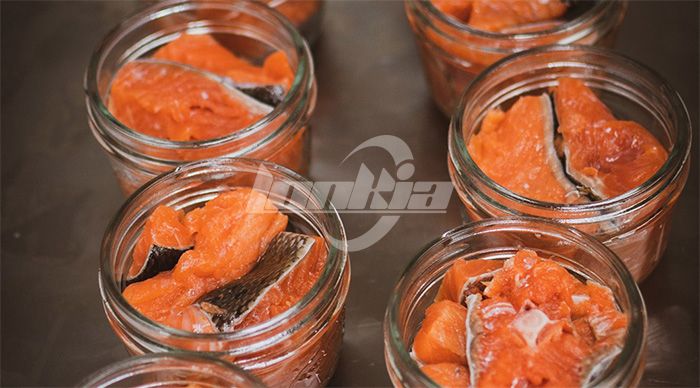
1. Raw Fish Receiving and Washing
Fresh or frozen fish is first received, sorted, and washed to remove impurities, scales, or debris.
Recommended Equipment:
Fish receiving tanks
Bubble washing machines or high-pressure spray washers
2. Deheading and Gutting Machine
This machine removes the fish heads and internal organs automatically, improving hygiene and reducing labor costs.
Features:
Adjustable for different fish sizes
Made of stainless steel
Easy to clean and maintain
3. Cooking or Preheating Equipment
Fish is steamed, boiled, or blanched depending on the recipe to firm the meat and reduce microbial load.
Options Include:
Continuous steam cookers
Hot water blanching machines
4. Manual or Automatic Filling System
Cooked fish pieces are placed into empty cans. Filling can be done manually (for specialty fish like sardines) or by machine for faster production.
Filling Machines May Include:
Weighing systems
Brine or oil dosing units
Vacuum filling heads (to reduce air)
5. Can Sealing Machine (Seamer)
Seals the can tightly to prevent leaks and contamination.
Features:
Suitable for round or oval cans
Double-seam sealing for durability
High-speed operation with safety interlocks
6. Sterilization (Retort Machine)
Canned fish is sterilized under high pressure and temperature to ensure food safety and long shelf life.
Sterilization Options:
Static or rotary retorts
Steam or water spray autoclaves
Temperature and pressure data logging systems
7. Cooling and Drying Section
After sterilization, cans are cooled using chilled water and dried to prevent rust and prepare for labeling.
8. Labeling and Coding
Labels are applied with product information, followed by batch coding and expiry date printing.
Types:
Shrink sleeve labelers
Wrap-around labelers
Inkjet/laser coders
9. Packing and Palletizing
Finished cans are grouped into cartons and automatically palletized for shipping.
Optional Add-ons:
Carton erectors and sealers
Robotic arm palletizers
Stretch wrapping machines
Optional Equipment for Value-Added Products
Flavor dosing systems for sauces or seasonings
Metal detectors for final quality control
CIP systems for automated cleaning
Conclusion: Customize Your Line for Capacity & Product Type
Whether you're producing 1,000 or 30,000 cans per hour, a well-configured fish canning production line ensures efficiency, safety, and consistent quality.
📦 Ready to start your fish canning project?
Contact us today for:
Customized line design
Machine specification sheets
Competitive pricing for export
Installation and after-sales support