
With the continuous growth in demand for seafood, canned fish has become one of the key products for many food processing companies. For businesses looking to enter this industry, the most critical issue is not simply purchasing equipment, but rather how to establish a stable and efficient canned fish production line. From the production process and equipment selection to production stability, proper planning of every step is essential to ensure the factory operates smoothly and remains profitable.
Understanding the Complete Processing Flow of a Canned Fish Production Line
Before constructing a canned fish production line, it is essential to clearly understand the entire processing workflow. Only by grasping the production logic can one select equipment appropriately and plan the factory layout effectively.
Generally, a standard fish canned production line primarily includes the following steps:
Raw fish washing → Deheading and gutting → Cutting into segments → Pre-cooking → Automatic canning → Adding seasoning liquid → Sealing → High-temperature sterilization → Cooling → Packaging.
Each stage is performed by dedicated equipment and connected via a conveyor system to form a continuous production line. Through automated control, companies can enhance production efficiency while ensuring product quality.
Identifying Core Equipment Suitable for the Product
The biggest challenge many clients face when establishing a canned fish factory is determining exactly which equipment is needed. In reality, a stable production line typically consists of the following categories of key equipment.
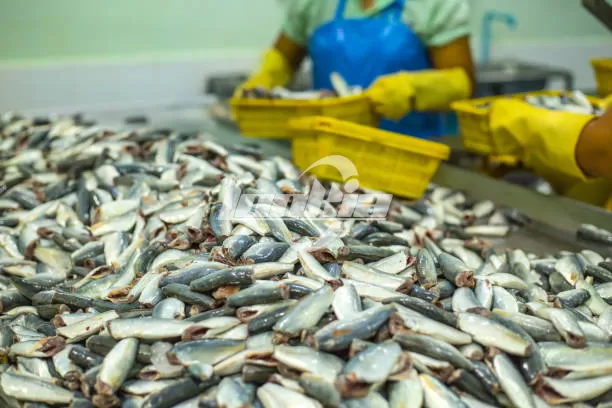
- Raw Material Processing Equipment: Raw material processing equipment includes fish washers, scaling machines, head and gut removal machines, and cutting equipment. These machines are designed to quickly complete the initial processing of fish while ensuring the integrity of the fish meat and processing efficiency.
- Pre-cooking Equipment: Pre-cooking equipment steams the fish meat to stabilize its structure and reduce excess moisture. After pre-cooking, the fish meat is more uniform during canning and helps maintain the product's texture.
- Automatic Canning Equipment: Canning equipment is used to precisely place fish pieces into cans and ensure consistent weight per can. Automatic canning not only reduces manual labor but also ensures product standardization.
- Canning Sealing Equipment: Canning sealing equipment is a critical component of the canned fish production line. Using double-seam or vacuum sealing technology, it creates a stable, airtight seal on the cans, preventing air ingress and extending the product's shelf life.
- High-Temperature Sterilization Equipment: High-temperature, high-pressure sterilization autoclaves are used to thoroughly sterilize the cans. A stable sterilization system is not only essential for food safety but also directly impacts the product's shelf life and quality.
In terms of complete canned fish processing line configuration, Lonkia typically provides comprehensive equipment solutions to ensure seamless integration between all components.
Rational Planning of Production Line Layout
In addition to equipment selection, production line layout is a critical aspect of establishing a canned fish production line. A well-designed layout helps avoid bottlenecks during production and improves overall efficiency.
Generally, a canned fish production line can be organized into the following zones:
- Raw Material Processing Zone
- Pre-cooking Zone
- Filling and Sealing Zone
- Sterilization Zone
- Finished Product Packaging Zone
This layout not only facilitates a smooth production flow but also simplifies daily equipment maintenance and production management.
Ensuring Stable Coordination Between Equipment
Many companies tend to overlook a critical issue when initially setting up a production line: the production rhythms of different pieces of equipment must be synchronized. For example, if the filling speed, sealing speed, and sterilization cycle are not matched, it can lead to production backlogs or idle equipment.
Therefore, when establishing a fish canning production line, equipment parameters must be designed based on overall production capacity to ensure a stable and continuous production rhythm across all equipment. Reputable equipment suppliers typically complete these synchronization tasks during the production line design phase, thereby reducing the need for adjustments later on.
Selecting an Experienced Equipment Supplier
For companies entering the canned fish processing industry for the first time, selecting the right equipment supplier is crucial. Professional suppliers not only provide individual machines but also offer comprehensive line planning and technical support, including:
- Production line design
- Equipment installation and commissioning
- Operator training
- Technical support
As an experienced equipment manufacturer, Lonkia typically designs complete canned fish production solutions tailored to a client's product type and output requirements, helping companies begin production more quickly.
Conclusion
The key to establishing a stable canned fish production line lies in understanding the production process, selecting appropriate equipment, and rationally planning the production layout. Once the various processing devices form a continuous, automated production system, the company can achieve stable and efficient canned fish production.
For companies looking to enter the canned fish processing industry, professional design starting from the equipment planning stage can significantly reduce operational risks and help factories achieve stable production more quickly.