
In the production of canned tomatoes, peeling not only affects the appearance of the finished product but also impacts subsequent processes such as dicing, cooking, and canning. This is particularly true for canned diced tomatoes, where the peeled pulp must retain a certain degree of firmness and integrity to prevent issues such as softening, crushing, or loss of shape during cutting and thermal processing. Therefore, selecting the appropriate industrial tomato peeler requires considering peeling efficiency, pulp loss, and subsequent processing requirements simultaneously.
Why Does the Quality of Tomato Peeling Affect the Final Canned Product?
1. Peeling Results Affect the Appearance of the Final Product
If peeling is incomplete, residual tomato skins may affect the appearance and eating experience of the canned product. It is also essential to avoid excessive removal of the flesh during peeling, as this would increase raw material loss and reduce tomato utilization.
2. Pulp Integrity Affects Subsequent Processing
For products such as diced tomatoes and whole tomatoes, pulp firmness directly affects cutting results and the final product's form. If tomatoes undergo excessive heat treatment during the peeling stage, their tissue may soften, leading to irregular dicing or a tendency to break apart after cooking. Therefore, tomato peeler must not only ensure the separation of the skin but also maintain the quality of the pulp after processing.
How Do Steam Tomato Peeling Machines Preserve Pulp Quality?
1. High-Temperature Steam Rapidly Softens the Skin
Steam peeling machines apply high-temperature saturated steam to tomatoes within a sealed chamber, causing the skin to heat up and soften rapidly, thereby reducing the adhesion between the skin and the pulp. Unlike peeling methods that rely on continuous mechanical friction, this technology primarily uses steam to treat the skin.
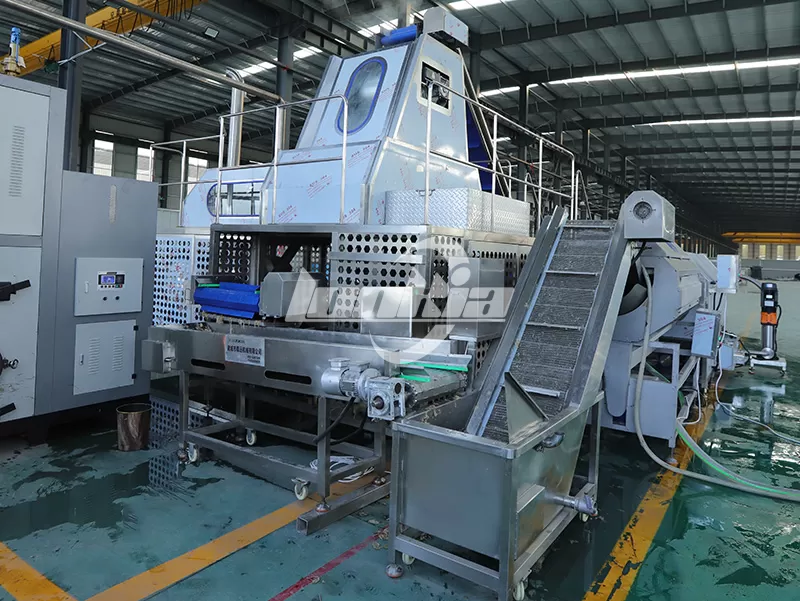
2. Rapid Steam Release Facilitates Skin Separation
After steam treatment is complete, the equipment rapidly releases pressure. The resulting pressure change and temperature differential promote separation between the skin and the flesh, followed by mechanical assistance to complete the peeling process. The entire process typically takes only a few seconds, helping to minimize the impact of prolonged heating on the tomato’s internal tissue.
The LONKIA tomato peeler employs this operating principle, with processing time adjustable within a range of 3–10 seconds, providing flexibility for parameter adjustments during processing trials with different tomato raw materials.
How to Select a Tomato Peeler Suitable for Canned Tomato Production?
When purchasing tomato peeler, it is recommended to focus on the following three aspects:
1. Matching Processing Capacity to the Production Line
The tomato peeling equipment's processing capacity must be determined based on the hourly feed rate of raw materials. The LONKIA tomato steam peeler has a nominal processing capacity of 500–5,000 kg/h, with configurations available to meet specific project requirements. The processing speeds of subsequent equipment—such as dicing, cooking, and canning machines—should also be considered to avoid production bottlenecks between process steps.
2. Adjustable Steam Pressure and Processing Time
The tomato peeler's steam pressure range is 0.6–1.2 MPa, and it is supplied by an external steam boiler. Before purchasing, verify the boiler's steam supply capacity and conduct tests using actual tomato samples to determine operating parameters that balance peeling effectiveness with pulp integrity.
3. Equipment Materials and Cleaning/Maintenance
For tomato processing equipment, prioritize the materials used in food-contact surfaces and ease of cleaning. Equipment made of SUS304 stainless steel helps meet daily food processing hygiene requirements; attention should also be paid to the cleaning and maintenance of the processing chamber, conveyor, and discharge areas.
Conclusion
Before formal procurement, it is recommended to test the equipment using actual production raw materials, focusing on peeling completeness, pulp damage rate, post-peeling firmness, and raw material loss. Additionally, dice the processed tomatoes and simulate cooking to observe whether the tomato chunks retain their expected shape.
When selecting a tomato peeler, do not focus solely on processing speed; it is more important to ensure that the peeled tomatoes meet the requirements for the final product. LONKIA can provide equipment configuration recommendations based on the customer’s raw material characteristics, target production capacity, and production process, helping tomato processing companies choose the most suitable peeling solution.