
Canned meat products are a staple in global food markets—ranging from luncheon meat and corned beef to ready-to-eat meat stews. To ensure consistent quality and high productivity, manufacturers must equip their production lines with the right machinery.
So, what equipment is essential for a meat canning production line? This guide walks you through the core machines, their functions, and how they fit into a complete system.
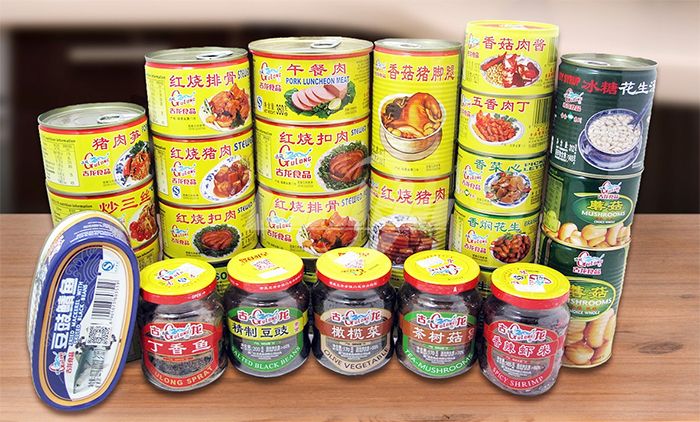
1. Meat Grinder or Cutter
Function:
The first step is to cut and grind fresh or frozen meat into uniform sizes, depending on the final product requirements.
Key Features:
Variable cutting plate sizes
Stainless steel construction
Suitable for beef, pork, chicken, or mixed meats
2. Meat Mixing Machine
Function:
This unit blends the ground meat with seasonings, additives, or brine to achieve uniform flavor and texture.
Options:
Vacuum mixers for better binding
Paddle or ribbon mixers depending on viscosity
3. Can Filling Machine
Function:
Automatically fills processed meat into metal cans or jars at controlled weights or volumes.
Filling Types:
Piston fillers for chunks or paste
Vacuum fillers for air removal and extended shelf life
4. Can Sealing (Seamer) Machine
Function:
Securely seals the lid on each can, ensuring it is airtight and ready for sterilization.
Considerations:
Suitable for tinplate, aluminum, or composite cans
Double seaming technology for leak-proof results
5. Retort Sterilization Machine (Autoclave)
Function:
High-temperature sterilization to eliminate bacteria and extend shelf life.
Types:
Steam retort
Water spray or rotary retort (for better heat penetration)
6. Cooling and Drying Conveyor
Function:
After sterilization, cans are rapidly cooled and dried to avoid rust and prepare for labeling.
7. Labeling and Coding Machine
Function:
Applies labels and prints batch codes or expiry dates on the cans.
Options:
Wrap-around labeling
Inkjet or laser coding
8. Carton Packing and Palletizing System
Function:
Groups canned products into cartons, then stacks onto pallets for distribution.
Automation Level:
Semi-auto or fully automatic case packers
Robotic palletizers for large-volume operations
Optional Add-Ons
Metal detector for safety assurance
Automatic cleaning systems (CIP) for hygiene compliance
Recipe management software for consistency
Final Thoughts
Setting up a meat canning production line is a significant investment—but with the right equipment, you can achieve efficient output, food safety compliance, and long shelf life.
Whether you're starting a small canning facility or upgrading an industrial plant, choosing the right machines is key.
📩 Contact us today to get a customized quote based on your processing capacity, can size, and automation level.