
When selecting a fruit canning production line, fully automatic and semi-automatic are the two most common options for customers. These two different levels of automation directly impact key factors such as production efficiency, labor scheduling, and return on investment. This article will provide a detailed analysis from aspects such as equipment structure, operational convenience, and production capacity to assist customers in making rational decisions.
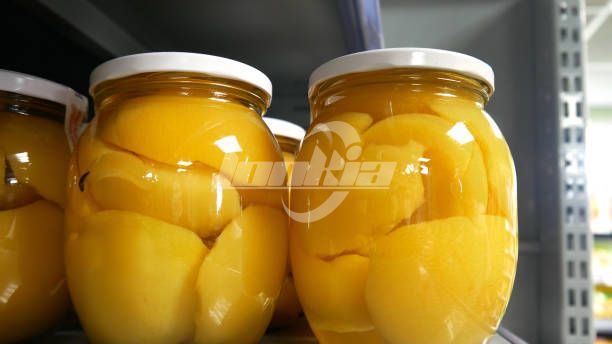
Advantages of Fully Automatic Fruit Canned Food Production Lines
Fully automatic production lines utilize PLC program control to achieve fully automated operations throughout the entire process, including fruit washing, sorting, peeling, pitting, filling, sealing, and sterilization. Their primary advantages include:
- Labor savings: Fruit canning line replaces manual labor for most repetitive tasks, reducing labor costs;
- Stability and efficiency: The system is equipped with automatic detection and feedback mechanisms to ensure continuous and precise production processes;
- Consistency: Products are uniformly specified, ensuring stable quality of finished canned goods;
- Automated Interconnection: Equipment is connected via conveyor lines, reducing manual handling and downtime.
Lonkia's automatic fruit canning production line is equipped with an intelligent touchscreen system and automatic fault alarm functionality, making it particularly suitable for customers requiring long-term, large-scale production.
Features of Semi-automatic Fruit Canning Production Line
The semi-automatic canned fruit production line still requires manual intervention in critical processes, such as manual feeding, manual canning, and operating part of the control panel. Its applications include:
- Lower equipment investment: Suitable for food processing factories with limited budgets or those just starting out;
- Flexible operation: Suitable for various small-batch fruit processing tasks, with easier production and material changes;
- High manual involvement: Requires relatively high technical skills from operators, necessitating professional training;
- Easy maintenance: Simple structure, convenient for daily cleaning and repairs.
Although the semi-automatic fruit canning line is slightly less efficient, it remains cost-effective in markets with diverse product varieties and small batch requirements.
How to Choose Fruit Canning Line Based on Your Factory's Needs?
The key to choosing between a fully automated or semi-automated canned fruit production line lies in evaluating the following factors comprehensively:
| Decision Factor | Recommended Option |
|---|---|
| High daily output and dense orders | Fully automated line |
| Limited budget or initial trial stage | Semi-automated line |
| Labor shortage, need for higher efficiency | Fully automated line |
| Multi-variety, small-batch production | Semi-automated line |
| High requirements for product consistency and appearance | Fully automated line |
If you have a clear plan for equipment upgrades or investment returns, choosing a fully automated fruit canning production line is undoubtedly the trend for future development. However, in some regions or specific markets, a semi-automated line can still offer enough flexibility and adaptability.
Summary
Whether you choose fully automatic or semi-automatic fruit canning production line, the key is to comprehensively consider your production scale, financial situation, and market demand. Lonkia has years of experience in manufacturing fruit canning production lines and can provide customers with tailored selection recommendations and customized solutions to ensure the efficient and stable operation of your pineapple canning production line, peach canning production line, and more.
Please contact us for a free solution assessment and project proposal.