
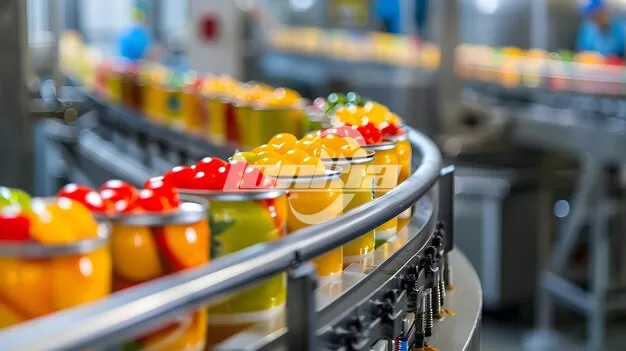
Modern canning production lines are designed to process large volumes of food while ensuring safety, efficiency, and consistent quality. Behind this efficiency is a range of specialized equipment that performs each step of the canning process. Understanding these machines helps manufacturers optimize production, maintain hygiene, and meet regulatory standards.
1. Can Fillers
Function: Fillers ensure that each can is loaded with the correct quantity of food and liquid.
Volumetric Fillers – Measure product by volume.
Weight-Based Fillers – Ensure precise weight for consistency and compliance.
Gravity or Piston Fillers – Handle different food textures, from liquids to viscous sauces.
Why it matters: Accurate filling reduces waste, improves efficiency, and ensures customer satisfaction.
2. Can Sealers (Seaming Machines)
Function: Sealers apply lids and create airtight seams to protect food from contamination.
Single-Head Sealers – Suitable for small to medium-scale operations.
Multi-Head Sealers – Designed for high-speed industrial production.
Why it matters: A strong, leak-proof seam is essential for product safety and long shelf life.
3. Retorts (Sterilizers)
Function: Retorts sterilize sealed cans using heat and pressure.
Batch Retorts – Flexible, suitable for smaller production runs.
Continuous Retorts – Ideal for large-scale, high-volume canning lines.
Why it matters: Sterilization ensures food safety by eliminating bacteria and extending shelf life.
4. Washers and Blanchers
Before filling, ingredients may need washing and blanching.
Vegetable Washers – Remove dirt and pesticides.
Blanching Machines – Inactivate enzymes, preserve color, and prepare foods for canning.
Why it matters: Pre-treatment improves food quality and prevents spoilage.
5. Cooling Systems
After sterilization, cans must be cooled quickly to prevent overcooking.
Water Spray or Immersion Cooling – Maintains product texture and taste.
Why it matters: Rapid cooling preserves food quality and ensures safe handling.
6. Labeling and Coding Machines
Function: Apply product labels and print date codes or batch numbers.
Why it matters: Supports traceability, branding, and compliance with regulations.
7. Secondary Packaging Equipment
Function: Groups cans into cartons, shrink wraps, or crates for easier transport.
Why it matters: Protects cans during distribution and improves supply chain efficiency.
Conclusion
A canning production line relies on an integrated system of equipment—including fillers, sealers, retorts, washers, and labeling machines—to ensure safe, efficient, and high-quality food processing. By choosing the right combination of machines and maintaining them properly, manufacturers can achieve optimal performance and meet the growing demand for canned products.