
The global demand for canned pet food continues to grow as consumers seek safe, nutritious, and convenient options for their pets. To meet this demand, manufacturers must design production lines that combine automation, efficiency, and strict compliance with safety standards. This article explores the essential elements of canned pet food production lines and the role of automation and regulatory compliance.
1. Why Automation Matters in Pet Food Production
Automation is at the core of modern canned pet food lines, bringing numerous advantages:
Consistent Quality – Automated dosing and mixing ensure the same texture, moisture level, and nutritional balance in every batch.
Higher Efficiency – Robotic handling, automated filling, and continuous retort sterilization reduce downtime and increase throughput.
Labor Savings – Automation reduces manual intervention, lowering labor costs and minimizing human error.
Traceability – Digital monitoring systems track ingredients and production steps, aiding in recall management if needed.
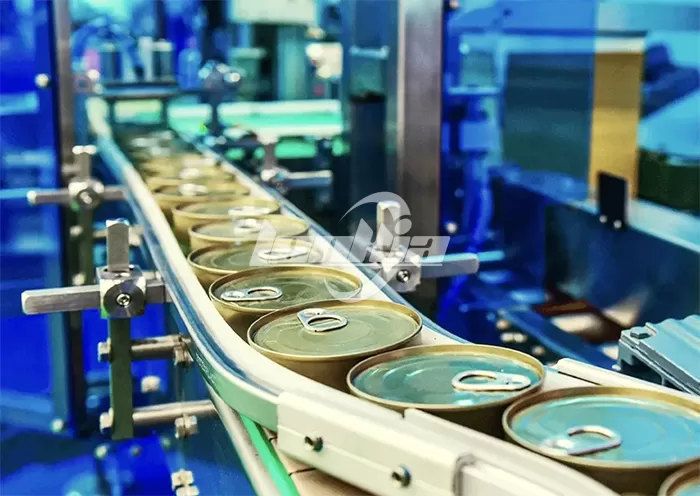
2. Key Stages in a Canned Pet Food Production Line
Ingredient Preparation – Raw meats, grains, and supplements are ground, mixed, and portioned.
Cooking & Blending – Ingredients are cooked in jacketed kettles or continuous cookers for digestibility and safety.
Filling & Seaming – High-speed can fillers portion precise amounts into cans, followed by hermetic sealing.
Sterilization (Retorting) – Retort machines sterilize sealed cans at high temperature and pressure, ensuring shelf stability.
Cooling & Drying – Rapid cooling prevents overcooking and maintains product integrity.
Labeling & Packaging – Cans are labeled, coded for traceability, and packed into cartons for distribution.
3. Compliance Standards in Canned Pet Food Manufacturing
Pet food production must follow stringent safety and quality standards, often similar to human food processing:
FDA & AAFCO (USA) – Pet food must meet nutritional guidelines and labeling regulations.
EU Feed Hygiene Regulation (183/2005) – Ensures hygiene, traceability, and animal welfare compliance in Europe.
HACCP & GMP – Hazard Analysis and Good Manufacturing Practices are critical for risk management.
ISO 22000 & FSSC 22000 – International standards for food safety management systems.
Automation helps meet these standards by providing real-time monitoring, precise control, and consistent documentation.
4. Emerging Trends in Pet Food Production Lines
Aseptic Processing – Advanced techniques for sterilizing without compromising nutrients.
Sustainability – Use of recyclable cans, energy-efficient retorts, and reduced food waste.
Flexible Production – Multi-recipe lines that can switch between pâté, chunks in gravy, and specialty diets.
IoT & Data Integration – Cloud-based monitoring to optimize operations and ensure regulatory compliance.
Conclusion
A well-designed canned pet food production line must deliver efficiency, quality, and compliance. With automation driving consistency and regulatory standards ensuring safety, manufacturers can produce high-quality canned pet food that meets both consumer expectations and global food safety requirements.