
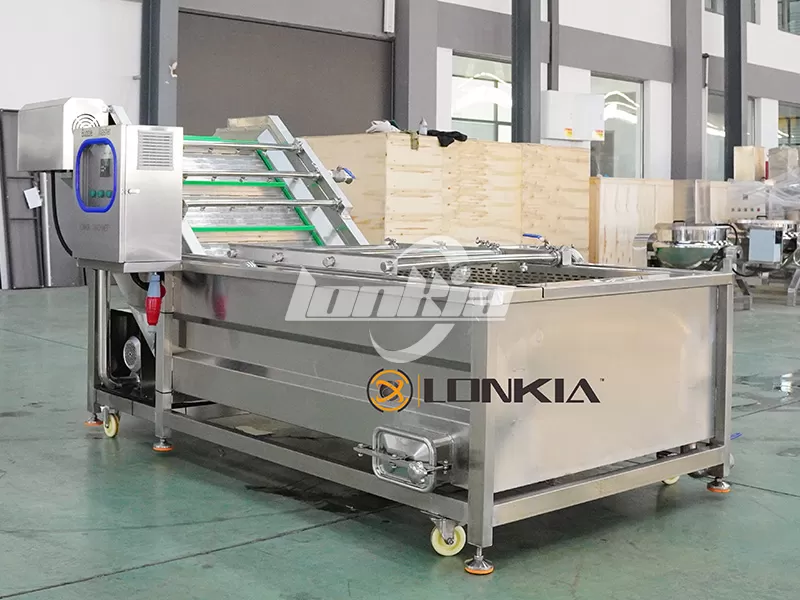
Once fruits and vegetables enter the processing line, dirt, sand, plant residues, and other impurities on their surfaces must be removed as thoroughly as possible before processes such as cutting, peeling, and canning. For raw materials with delicate surfaces—such as tomatoes, yellow peaches, and cucumbers—relying solely on vigorous mechanical scrubbing may cause bruising or damage. The bubble washing machine utilizes the synergistic effect of water flow, bubbles, and the conveying process to achieve relatively gentle cleaning while ensuring continuous processing.
How Does a Bubble Washing Machine Work?
1. Combined Action of Water Flow and Bubbles
Once the produce enters the washing tank and is submerged in water, the bubble washing machine uses a bubble generation system to create continuous bubble movement within the water. The turbulence generated as the bubbles rise and burst acts on the surface of the produce, loosening and dislodging adhering impurities such as soil and sand. At the same time, the water flow carries the produce through the tank, ensuring thorough cleaning of all areas.
Unlike methods that rely solely on friction from brush rollers, this cleaning method reduces harsh mechanical contact, making it more suitable for fruits and vegetables where surface damage must be minimized.
2. Water Flow Further Rinses the Surface
After the bubbles loosen the adhering impurities, the continuous water flow further carries the dislodged debris away from the product's surface. Some equipment also incorporates a water jet system to ensure a more uniform cleaning effect. LONKIA's fruit vegetable washer machine utilizes a precise water flow system and is configured according to different raw materials and production capacity requirements.
What Determines the Cleaning Effect?
Raw Material Characteristics Determine Cleaning Parameters
Stronger bubbles and longer cleaning times do not necessarily guarantee better results. Soft raw materials, such as tomatoes and yellow peaches, require controlled water flow and bubble action to avoid excessive impact; conversely, raw materials with heavy surface soil require more vigorous water flow.
Therefore, when purchasing bubble washing machine, one should first clarify the type of raw material, hourly processing capacity, the condition of surface impurities, and subsequent processing steps before determining the equipment's size and operating parameters.
Processing Capacity Must Match Cleaning Time
The fruit and vegetable washing machine's reference processing capacity is 500–2,000 kg/h, with a water flow rate of approximately 30–50 L/min; specific configurations can be adjusted according to production requirements.
If the actual feed rate is high but equipment with insufficient processing capacity is selected, it may lead to material buildup and affect cleaning effectiveness. Therefore, when selecting processing capacity, one should not rely solely on the bubble washing machine's maximum specifications but must also consider the actual speed of the entire production line.
Can It Be Used for Different Fruits and Vegetables?
The bubble washing machine can be used for the continuous washing of various food ingredients, such as tomatoes, yellow peaches, and cucumbers. For different products, the washing process can be adjusted based on the size, ripeness, and surface condition of the raw materials.
The main body of the equipment is manufactured from food-grade AISI 304/316 stainless steel and is equipped with a PLC touchscreen control system, allowing operators to easily manage equipment operations.
How to Choose the Right Bubble Washing Machine?
Before purchasing, it is recommended to provide the equipment supplier with the following information:
- Name and size of the produce
- Target hourly processing capacity
- Main contaminants on the produce surface
- Whether integration with peeling, cutting, or blanching equipment is required
- Existing power supply specifications at the facility
- Requirements for equipment materials and dimensions
This information helps the supplier determine the most suitable tank size, conveyor structure, bubble system, and control configuration.
For customers looking to establish a continuous fruit and vegetable processing line, LONKIA can provide a bubble washing machine configuration tailored to the raw materials and production requirements, and integrate the equipment with upstream and downstream processes to ensure the washing stage is seamlessly incorporated into the overall processing workflow.